
Ovarian cancer remains the deadliest of all gynaecological cancers[1]. One of the main reasons is that it is often diagnosed at a late stage, when treatment options are more limited and the chances of successful treatment are lower. This has led to ovarian cancer sometimes being called a “silent killer”. This description, however, can be misleading, as ovarian cancer is not symptomless. Instead, its early signs, such as persistent bloating or abdominal discomfort, can often be vague and easily mistaken for less serious conditions. At the same time, reliable tools for detecting ovarian cancer early are still lacking.
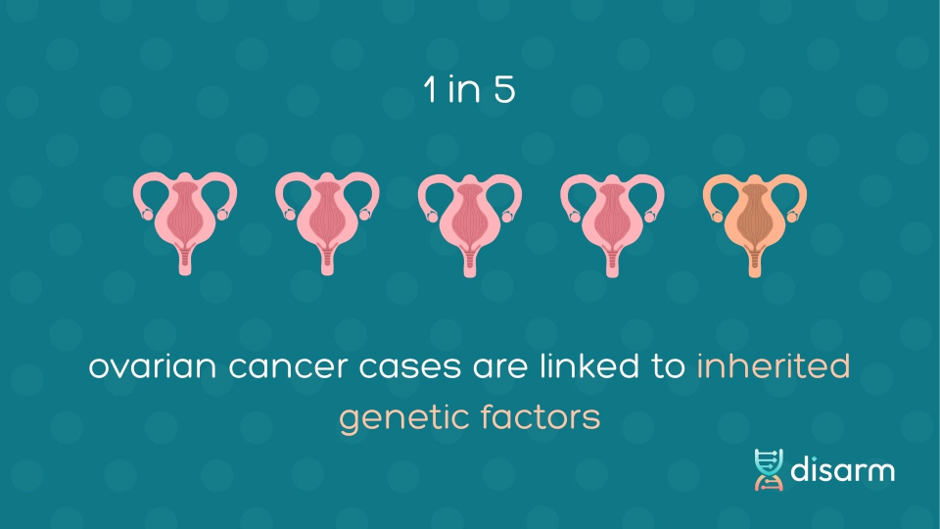
Roughly 20% of ovarian cancer cases are linked to inherited genetic factors[2], which are factors that are passed on from parents to their children. For these individuals and their families, understanding their inherited risk of ovarian cancer earlier can make a significant difference as it can support more proactive monitoring, preventive options, and informed healthcare decisions. However, current approaches to assessing ovarian cancer risk are not yet accurate or personalised enough to deliver the level of precision needed for routine, personalised care.
One major roadblock to earlier detection is that current methods can miss ovarian cancers at an early stage or incorrectly suggest that ovarian cancer may be present when it is not. The consequences of this can be significant, particularly for people considering preventive options such as regular monitoring or risk-reducing surgery (such as the removal of both fallopian tubes and/or ovaries), which can have major physical, emotional, and financial impacts.
With these challenges in mind, there is a clear and urgent need for both more personalised risk assessment and reliable tools for earlier detection of ovarian cancer.
This is where DISARM comes in.
A central focus of the DISARM project is to improve how we identify individuals at increased risk of ovarian cancer. Through clinical studies that will be carried out across Portugal, Lithuania, the Czech Republic, and Greece, DISARM will test the CE-marked personalised risk assessment tool, CanRisk, and its integration into routine healthcare. Unlike current approaches, CanRisk combines genetic information with lifestyle, hormonal, and demographic factors to provide a more personalised estimate of an individual’s risk for ovarian cancer.
Alongside this, another important element of the DISARM project is to test new and promising early detection tools. To do this, the project will evaluate three different tests, using only the blood samples of more than 2,000 women across five countries. DISARM will also develop a tool, OVA-MULTIMODAL, to explore whether combining the results from all three tests could improve the early detection of ovarian cancer even further. Together, these approaches aim to make earlier detection of ovarian cancer more accurate and reliable than is currently possible.
Importantly, DISARM is not only focused on scientific validation, but also on real-world implementation. Through digital platforms such as OVA-ONLINE, a citizen and patient awareness platform, and OVA-VIEW, a health-policy making dashboard, patients, their families and the general public will have access to co-created and accessible information on ovarian cancer, while policymakers and healthcare decision-makers will be able to explore the findings of DISARM to assess how new approaches could be integrated into national health systems.
Through a combination of cutting-edge science, digital innovation, and stakeholder collaboration, DISARM is helping to close critical gaps in ovarian cancer care. Ultimately, the project hopes to make personalised risk assessment and earlier detection more accessible, more precise, and more effectively embedded in healthcare systems across Europe, with the aim to transform the health outcomes of patients and families at risk of ovarian cancer.
[1] https://worldovariancancercoalition.org/ovarian-cancer/
[2] https://targetovariancancer.org.uk/about-ovarian-cancer/genetic-genomic-testing/hereditary-ovarian-cancer

This work received funding from the European Union’s Horizon Europe Research and Innovation Programme under Grant Agreement No 101214318 (DISARM). Views and opinions expressed are however those of the author(s) only and do not necessarily reflect those of the European Union or the Health and Digital Executive Agency (HaDEA). Neither the European Union nor HaDEA can be held responsible for them.
To stay up to date with the work, research, and results of the DISARM project, follow us on LinkedIn, X, and Bluesky.