
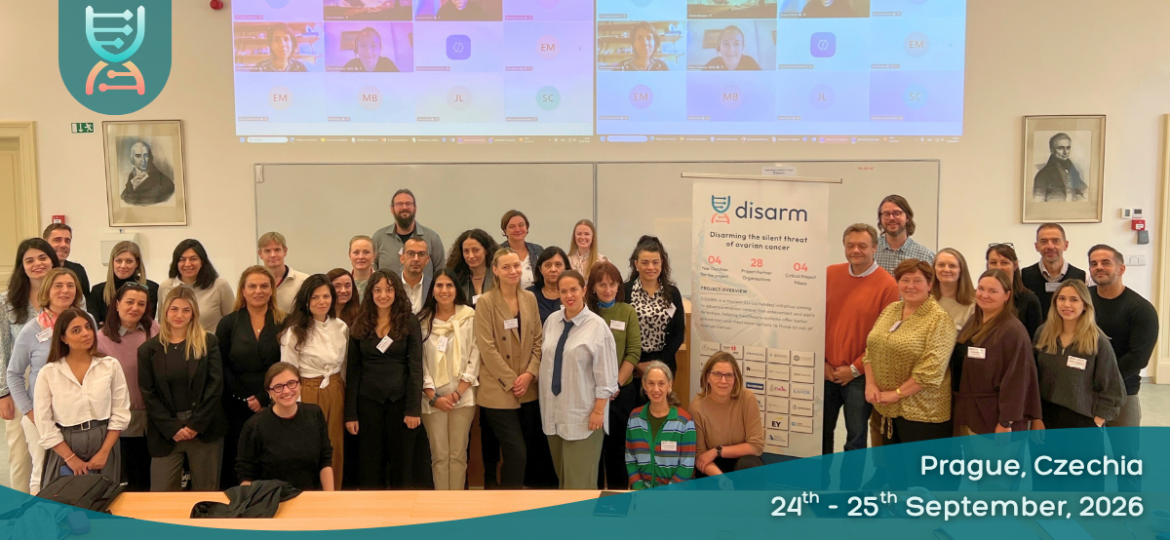
From the 24th to 25th September 2026, the DISARM consortium gathered together in Prague, Czechia, at the Institute of Physiology at Charles University for the second plenary meeting of our project.
The morning of the first day was kicked off with a warm welcome from our Charles University hosts and a little bit of history about the university itself (did you know it’s the oldest university in Central Europe?). Following this, our partners were inspired by keynote presentations from the Czech patient organisation VERONICA and a patient representative. They shared important perspectives and insights on the ovarian cancer incidence and genetic testing rates in Czechia, along with several public awareness and educational initiatives, and lived experiences, among other topics.
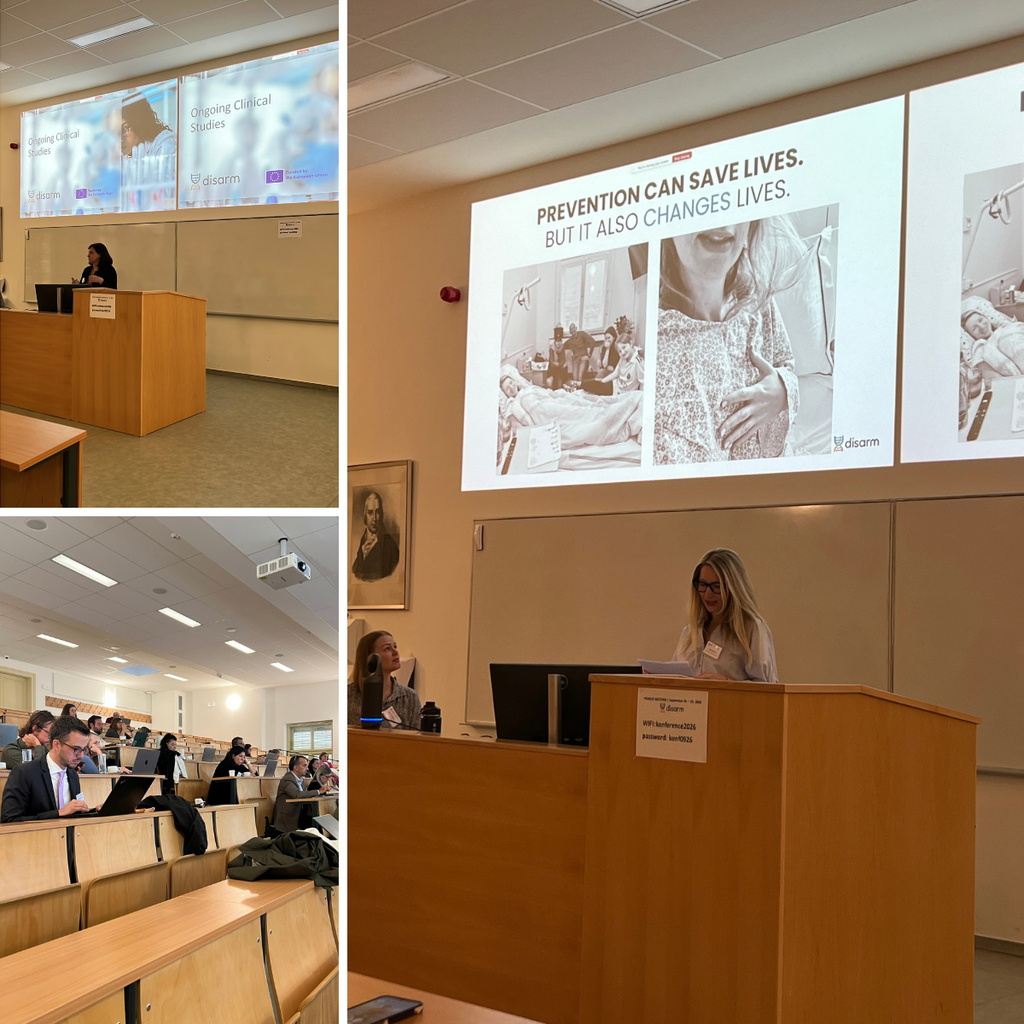
The morning then continued with a series of closed working sessions focused on DISARM’s clinical studies where partners reviewed the status of ongoing studies, discussed outstanding actions, and identified priorities for the months ahead. With two clinical sites actively recruiting participants, the consortium also took time to reflect on lessons learned so far and to discuss the feedback that was gathered from those involved in the studies. These discussions are an important part of ensuring that the project’s work, research, and activities continue to progress, and to ensure that any challenges are addressed collaboratively in the true spirit of the project.
Following a delicious lunch, the focus turned in the afternoon to some of DISARM’s key technical developments. The consortium explored the CanRisk (a mature, validated, and CE-marked technology) polygenic risk score (PRS) workflow, including a demonstration of how PRS calculations are carried out. This was followed by a presentation on OVA-VOC (a non-invasive and affordable early detection ovarian cancer assay based on Volatile Organic Compounds emitted from blood plasma), covering its current status and opportunities for future implementation at clinical sites.
The day’s programme concluded with dedicated working sessions on DISARM’s solutions for holistic evaluation, focusing on cost data collection in the DISARM clinical studies and analysis methodologies, as well as discussions on policy aspects of early detection programmes and mapping the policy landscape across the countries participating in the project.
The second day of the DISARM plenary meeting continued with a strong focus on the tools, technologies, and collaborative approaches that will support the project’s work towards the early detection of ovarian cancer. The morning kicked off with a keynote presentation from Christos Papaneophytou (UNRF), exploring the integration of the three DISARM assays (circulating miRNA, glycosylation, and Volatile Organic Compound profiles) towards a multimodal liquid biopsy framework to facilitate earlier detection of ovarian cancer.
Following the keynote, the group split into parallel sessions. Technical sessions focused on DISARM’s internal data management and how partners’ local data infrastructures will interface with the integrated platform being developed. In parallel, the Citizen Awareness Campaign sessions brought together partners and patient associations involved in these activties to discuss current and future topics, content, and activities for the campaign.
The morning continued with a presentation of the first version of OVA-RISK (a tool aimed at exploring multi-tier personalised risk assessment), giving partners an opportunity to explore this developing component of the project. This was followed by a workshop on DISARM’s approach to supporting genetic counselling across the participating clinical sites. This session considered current evidence on genetic counselling within a family unit, from communicating risk-related information to family action, and included discussions regarding plans for desk research and relevant co-creation activities.
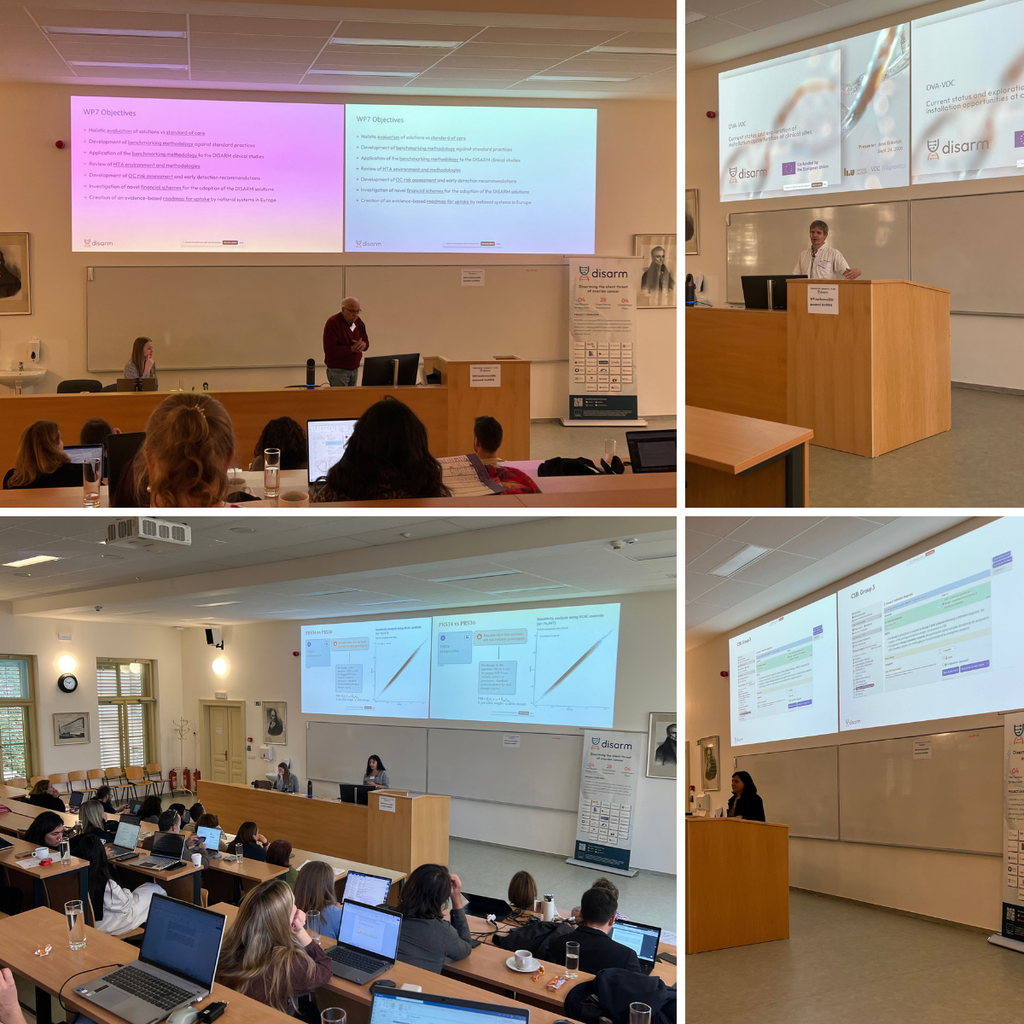
The afternoon then provided an opportunity for partners to work collaboratively on a series of key topics connected to DISARM’s co-creation activities. This started with discussing the relevant ethical and legal considerations needed when doing this work. Then, the outcomes of OVA-ONLINE’s (a citizen/patient awareness platform) first online workshop and desk research was presented. After this, partners were informed on how end-user requirements for OVA-VIEW (a healthy policy–making dashboard) are gathered. This was followed by an interactive exercise of gathering OVA-VIEW end-user requirements from partners.
The final sessions of the day looked towards the future, with an exploitation workshop on how the impact of the tools DISARM is developing can be maximised beyond the life of the project, and the first actions to be undertaken towards this. The last session was a presentation and discussion of ideas for hackathons on the early detection of ovarian cancer.
Together, the two days in Prague provided an important opportunity for DISARM partners to take stock of our progress, exchange knowledge, and work collaboratively across the project’s ongoing activities. We are looking forward to the upcoming months, when the hard work from this meeting will be put into action, helping us to make strides towards achieving the project’s goals.

This work received funding from the European Union’s Horizon Europe Research and Innovation Programme under Grant Agreement No 101214318 (DISARM). Views and opinions expressed are however those of the author(s) only and do not necessarily reflect those of the European Union or the Health and Digital Executive Agency (HaDEA). Neither the European Union nor HaDEA can be held responsible for them.
To stay up to date with the work, research, and results of the DISARM project, follow us on LinkedIn, X, and Bluesky.