

Welcome to the first edition of the brand new DISARM Newsletter!
We are pleased to share the first edition of the DISARM newsletter, covering the project’s initial six months of activity and collaboration.
Funded under the EU Mission on Cancer, DISARM brings together 28 partners from 12 countries to advance ovarian cancer risk assessment and early detection with the long-term goal of integrating life-saving approaches into routine healthcare.
Since the project launch, the consortium has built strong momentum across scientific collaboration, stakeholder engagement, and communication activities. Below is a snapshot of key highlights.
Stay connected with us across all our social media channels and website:
- LinkedIn: DISARM EU
- X: @disarmeu
- YouTube: @DISARMEU
- Bluesky: @disarmeu.bsky.social
- Website: https://disarm-project.eu/
Got questions about our work or want to collaborate? Drop us a line at bmoore@carrcommunications.ie
Project Launch and Early Visibility
DISARM officially launched in September 2025, marking the beginning of an ambitious European collaboration to transform how ovarian cancer is detected and managed.
Early communication efforts have been targeted yet informative, focused on:
- Publication of the project’s first press release
- Awareness raising during Gynaecological Cancer Awareness Month
- Initial media coverage across specialised and institutional channels
The project quickly gained visibility through features in several established outlets, including:
These early placements helped position DISARM within the European and global cancer research landscape.
Kick-Off Meeting in Athens
A major milestone was the DISARM Kick-Off Meeting, held in Athens in early October 2025 and hosted by the coordinator of the project, I-SENSEGroup/ICCS.
Over two intensive days of introductions, collaboration, and discussions, partners aligned on:
- Clinical study planning
- Liquid biopsy innovations
- Risk assessment strategies
- Methodology for Polygenic Risk Score adaptation across populations
- Social research and citizen engagement
- Policy development pathways
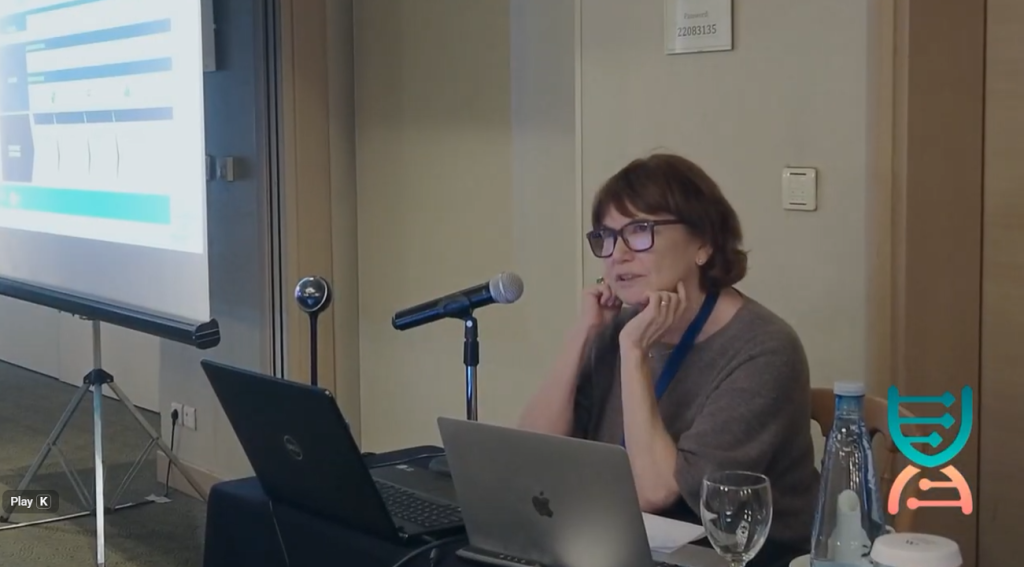
Keynote contributions from Clara MacKay (World Ovarian Cancer Coalition) and Prof. Antonis Antoniou (University of Cambridge) were particular highlights from the meeting, reinforcing the project’s scientific and societal ambition.
Check out our wrap-up and ‘Behind the Scenes‘ videos from the meeting!
Project Progress
During the first six months of the project, the DISARM consortium has reached an important milestone in preparing its two major clinical studies: Clinical Study A (CSA) and Clinical Study B (CSB). Through close collaboration across multiple work packages and partners, the study protocols and informed consent forms have been developed, and are now in the final stages of preparation before submission for ethical approval. Achieving this milestone required extensive coordination to consolidate scientific evidence on ovarian cancer risk assessment and early detection, align clinical methodologies, and ensure that study procedures are robust, harmonised, and ready for implementation across participating countries.
A key part of this collective effort has been the development of harmonised standard operating procedures (SOPs) for blood collection, processing, storage, and shipment across clinical sites. These procedures will ensure consistency and traceability in biospecimen management, providing a strong operational foundation for the large-scale clinical research activities ahead. Alongside this work, the consortium has also carried out an extensive review of ovarian cancer risk factors, recent advances in biomarkers relevant to the project’s research (including circulating microRNAs, glycan profiling, and volatile organic compounds), and EU guidelines and best practices for ovarian cancer risk assessment, genetic counselling and early detection.
This progress has been made possible through the coordinated contributions of many partners across the consortium. Clinical, technical, and regulatory expertise have come together to support protocol development, legal and ethical compliance, laboratory alignment, and the preparation of patient-facing materials. The involvement of patient advocacy organisations has also played an important role in ensuring that study documentation and communication materials are clear, accessible, and centred on the needs of participants.
In preparation for the upcoming DISARM activities, a formal Data Management Plan (and AI Act Compliance report) was also developed in collaboration with technical and regulatory partners, to ensure that the DISARM project aligns with FAIR principles (Findable, Accessible, Interoperable and Reusable data), Horizon Europe open science practices, and the EU Artificial Intelligence Act (AI Act).
Partner Engagement and Storytelling
“My role in the DISARM project is really about making sure that the patient voice and patient interests are embedded right in from the beginning.”
Can you guess who might have said this? You can find out in the DISARM Partner Interview Series, where members of the consortium share their roles in the project, their expertise, and what they hope DISARM will achieve.
Episodes released during this period include:
- Clara MacKay — World Ovarian Cancer Coalition
- Laura Carreto — EVITA
- Fatima Vaz — IPO Lisboa
- Dimitra Dionysiou – ICCS
Check out the full series to find out!
Project Website
A major dissemination achievement was the official launch of the DISARM website in December 2025, providing a central hub for:
- Project objectives and methodology
- Partner information
- News and updates
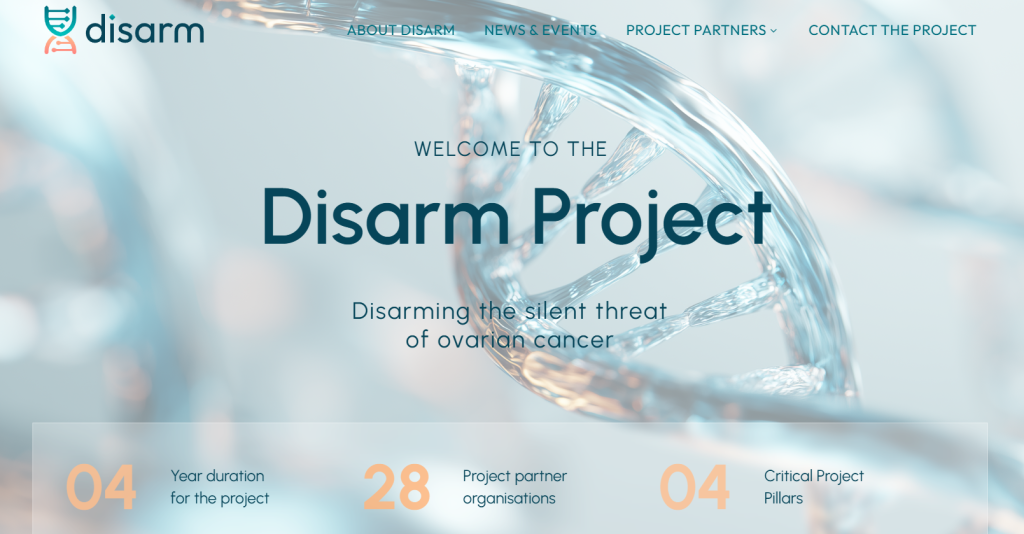
Social media activity has steadily expanded the project’s reach, supporting awareness among researchers, clinicians, policymakers, and patient communities.
Scientific and Research Highlights
Despite being only six months old, the DISARM consortium partners are already actively contributing to important advances in ovarian cancer, including:
- New research on machine-learning-enhanced VOC detection for ovarian and endometrial cancer
- Presentations on DISARM at major international scientific conferences (e.g., CSBMB Annual Symposium, China)
- Continued development of the OVA-VOC assay methodology
These early outputs help to reinforce DISARM’s focus on enabling earlier, non-invasive detection. Stay tuned for more very soon!
Building Strategic Collaboration: EARLYSCAN Cluster
Last, but certainly not least, was an important strategic step with the launch of the EARLYSCAN (Early Screening & Hereditary Cancer Awareness Network) cluster, bringing together three innovative projects under the EU’s Cancer Mission – DISARM EU, PREDI-LYNCH, and SHIELD project.
The EARLYSCAN cluster was recently launched to strengthen prevention and early detection strategies for heritable cancers across Europe. Operating under the EU Mission on Cancer, the projects involved in the early EARLYSCAN cluster aim to align research efforts, maximise the impact of EU investment, and accelerate the translation of innovative diagnostics into clinical practice. Through collaboration across countries, health systems, and cancer types, EARLYSCAN aims to address early detection as a full pathway challenge — from risk identification and screening technologies to clinical implementation and policy uptake.
Within the cluster, each project contributes complementary expertise. While DISARM focuses on improving ovarian cancer risk assessment and early detection through innovative liquid biopsy approaches and implementation-ready tools, PREDI-LYNCH targets cancers linked to Lynch syndrome using non-invasive diagnostics and artificial intelligence, and SHIELD works on earlier detection of pancreatic cancer in individuals with familial or genetic risk. By coordinating scientific approaches, clinical pathways, and data practices, EARLYSCAN aims to support more coherent European standards for early detection of heritable cancers and ultimately improve outcomes for people at increased genetic risk.
To learn more about the launch of the cluster, you can read the EARLYSCAN press release published in February on the DISARM website: https://disarm-project.eu/2026/02/03/press-release-earlyscan-cluster-advances-early-cancer-detection/
That’s all for the first issue of the DISARM newsletter!
To help us reach more readers, be sure to share this edition of the newsletter across your social channels and tag anyone who you think might be interested in learning more about the DISARM project and its mission to advance ovarian cancer risk assessment and early detection.
Until next time!

This work received funding from the European Union’s Horizon Europe Research and Innovation Programme under Grant Agreement No 101214318 (DISARM). Views and opinions expressed are however those of the author(s) only and do not necessarily reflect those of the European Union or the Health and Digital Executive Agency (HaDEA). Neither the European Union nor HaDEA can be held responsible for them.
To stay up to date with the work, research, and results of the DISARM project, follow us on LinkedIn, X, and Bluesky.