

The DISARM project recently brought together patients, patient advocates, researchers, communication experts, and more for an engaging and insightful online co-creation workshop. The meeting focused on an important step in the development of OVA-ONLINE, the citizen and patient awareness platform focused on the value of personalised risk assessment and early detection of ovarian cancer.
During the workshop, DISARM coordinators from ICCS introduced the project’s key objectives, including DISARM’s four interconnected pillars, its clinical studies, and the role of OVA-ONLINE in supporting people who may be at increased risk, including hereditary predisposition. Guided by our partners EVITA and CARE, participants from various EU countries, including patient advocates, clinical partners, researchers, and more explored how the platform can provide clear, trustworthy, and accessible information for different audiences, including the general public, individuals with a potential hereditary risk, healthcare professionals, and family members who can help share important messages.
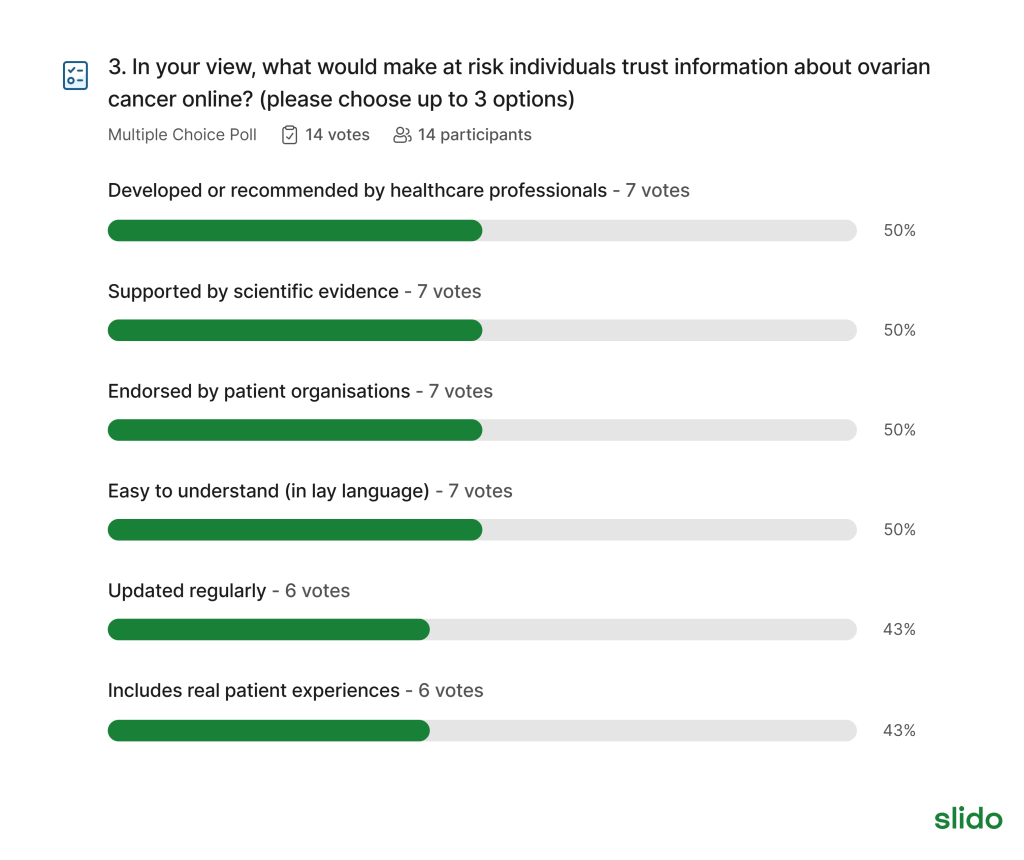
A key theme that ran throughout the discussion was the need to build a platform that people can trust. Participants highlighted the importance of scientific evidence, up-to-date information, and real-life experiences from patients and families. They also discussed the role of digital channels such as search engines, social media, and emerging AI tools in helping people find health information that is both timely and reliable.
The workshop also helped identify practical priorities that will help to guide OVA-ONLINE development. These included avoiding duplication of existing resources, working with established patient and healthcare organisations, while ensuring that the platform provides appropriate psychosocial support and clear next steps for users.
The wide range of perspectives shared during the workshop will help shape the next stages of the platform’s design. By listening directly to the needs of patients, clinicians, researchers, and other stakeholders, DISARM aims to create a resource that is not only informative but genuinely useful for the people it is designed to support.
The insights gathered will now contribute to refining user requirements and guiding the development of OVA-ONLINE as the project continues its work towards improving awareness, prevention, and early detection of hereditary ovarian cancer risk.

This work received funding from the European Union’s Horizon Europe Research and Innovation Programme under Grant Agreement No 101214318 (DISARM). Views and opinions expressed are however those of the author(s) only and do not necessarily reflect those of the European Union or the Health and Digital Executive Agency (HaDEA). Neither the European Union nor HaDEA can be held responsible for them.
To stay up to date with the work, research, and results of the DISARM project, follow us on LinkedIn, X, and Bluesky.